Educators regularly encounter students who struggle academically, behaviorally, or emotionally. The first question is often why: What’s beneath the surface of the disruptive behavior, quiet withdrawal, or inconsistent work habits? In many cases, the underlying issue is a gap in social emotional learning (SEL) skills, or how students understand emotions, manage themselves, and build healthy relationships. When teachers can pinpoint strengths and areas for growth, interventions become more targeted, meaningful, and effective.
This article offers a streamlined, teacher-friendly approach to evaluating students’ social emotional skills through everyday observations. You’ll learn why quick assessments matter, how to interpret patterns in student behavior, and what to do with the information once you have it.
Why Is Assessing SEL Skills Important?
Assessing students’ SEL skills for students provides insight into how they navigate emotions, relationships, and problem-solving. These competencies directly influence classroom behavior, academic persistence, and peer interactions. For grades 5–9 especially, group-based SEL instruction is powerful because it provides natural opportunities for students to practice communication, empathy, and emotional regulation. When educators understand each learner’s needs, they can deliver precise, responsive support that builds confidence and competence.
A Simple Way to Start Identifying SEL Strengths and Needs
Teachers already collect valuable information about students simply by observing how they respond to stress, collaborate in groups, handle frustration, or communicate feelings. By organizing those observations into a structured routine, educators can quickly identify patterns in students’ emotional skills. This process doesn’t require formal testing or lengthy documentation—just a few intentional moments of noticing, reflecting, and recording. Small insights often reveal which SEL skills need reinforcement.
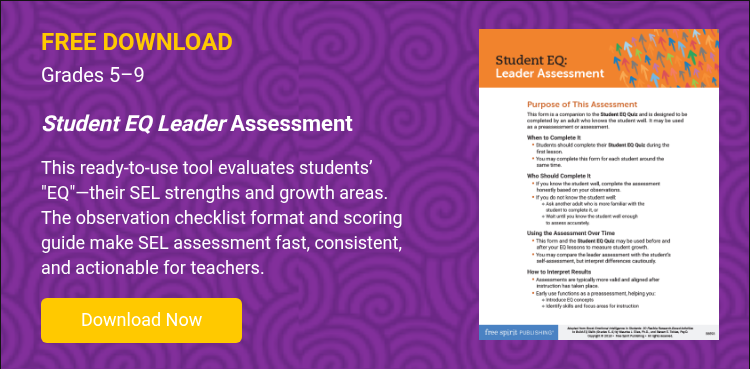
It’s also valuable to involve students in this process to make it collaborative and transparent. A self-assessment from Boost Emotional Intelligence in Students: 30 Flexible Research-Based Activities to Build EQ Skills (Grades 5–9) by Maurice J. Elias, Ph.D. and Steven E. Tobias, Psy.D. will get students thinking about how they manage their emotions and help guide them in understanding their feelings, relationships, and decision-making skills. It also helps students and teachers identify areas for growth. This assessment is an excellent companion to the Student EQ Leader Assessment.
How Do You Interpret Patterns in Students’ SEL Skills?
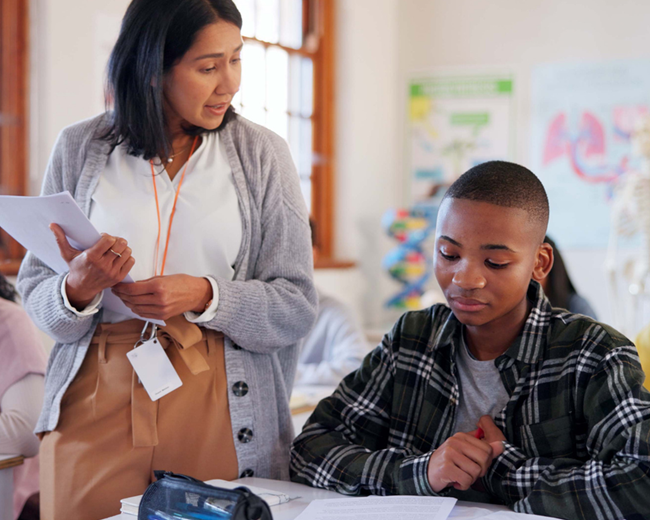
Once you begin paying attention to specific behaviors, like how a student manages emotions, listens to peers, solves problems, or asks for help, you’ll start noticing trends. Students who struggle across multiple categories may need foundational instruction in core SEL skills for elementary students or middle-grade learners. Students who show inconsistent behaviors may benefit from targeted reinforcement. And even students with strong social emotional skills still benefit from practicing leadership, empathy, and communication through group work.
What Different Patterns May Reveal
Students who consistently display low or limited SEL behaviors across many settings may benefit from structured, small-group intervention. These students often need more guided practice with emotional vocabulary, self-regulation routines, or relationship-building exercises. Before making any referrals for additional support, group-based SEL work can produce significant, observable progress.
Students who show a mix of strong and weak behaviors usually benefit from targeted skill-building. This group includes learners who are socially comfortable but struggle with emotional regulation, or those who excel academically but find it difficult to communicate their needs. Reinforcing their strengths while addressing specific skill gaps helps create balanced, sustainable growth.
Students who demonstrate strong SEL skills across settings—your “SEL stars”—may still have areas to strengthen. These learners can model leadership during group tasks, support peers through collaboration, and practice empathy by engaging in activities that stretch their interpersonal awareness. Mixed-skill groups allow all students to learn from one another.
What If a Student Shows a Specific Area of Concern?
Even if a student demonstrates strong overall SEL skills, any isolated difficulty (such as struggling to wait patiently, misreading social cues, or shutting down under stress) deserves attention. Because SEL skills for students develop unevenly, single-skill gaps are common. Addressing them early prevents frustration and escalation later. Simple strategies like modeling emotional language, offering structured problem-solving steps, or providing guided practice during peer interactions can create measurable improvements.
Bringing SEL Assessment into Your Instructional Routine
A quick SEL check doesn’t need to feel like one more task added to your plate. Think of it instead as a lens: an intentional way of observing students that leads to more effective instruction and smoother classroom interactions. Some teachers integrate SEL reflection into morning routines; others make note of behaviors during group work, transitions, or independent tasks.
Consistency matters more than perfection. The more you observe with SEL in mind, the clearer the patterns become and the easier it is to support students in ways that feel natural and sustainable.
Assessing SEL Skills FAQs
How often should teachers assess SEL skills?
A brief review every six to eight weeks helps track growth in SEL skills and keeps interventions responsive.
Who should complete the assessment or observation?
Any adult who regularly interacts with the student—teachers, counselors, or support staff—can reliably evaluate social emotional skills using structured observations.
Is this process appropriate for elementary students?
Yes. Identifying early gaps in SEL skills for elementary students helps prevent future behavioral and academic challenges.
Using SEL Insights to Guide Meaningful Growth
When teachers intentionally observe and reflect on how students manage emotions, interact with others, and navigate challenges, they gain the clarity needed to provide meaningful support. Understanding students’ SEL skills allows educators to personalize instruction, plan effective group lessons, and help students build confidence in their emotional and social abilities. Small insights often lead to big improvements that benefit classroom climate, academic readiness, and students’ long-term well-being.