The benefits of reading fiction for students extend beyond enjoying a good story. Engaging fiction gives students opportunities to strengthen reading comprehension, recognize story structure, explore different perspectives and experiences, and build motivation to read more. When students have access to appealing stories and opportunities to choose what they read, fiction can become a meaningful part of their reading lives.
For elementary teachers, literacy specialists, and school leaders, fiction offers a practical starting point for helping students develop as readers. In my experience as an educator and district curriculum specialist, engaging fiction provided a natural way to strengthen comprehension skills while helping students connect with the stories they read.
Engaging Fiction Can Encourage Students to Read More
Research on reading motivation and achievement has found a meaningful relationship between students' motivation to read and their reading achievement. Providing engaging reading experiences is one way educators can encourage students to spend more time with books. Although reading volume and achievement are related, individual outcomes depend on many factors, including students' reading skills, access to books, and instructional experiences.
One way to encourage students to read more is to provide a variety of fiction books that capture their interests and help them connect with the characters and stories they read.. Fiction can offer engaging reading experiences through imaginative plots, relatable characters, and opportunities to explore new worlds. When selecting fiction texts for students, consider the following attributes:
- diverse characters
- engaging stories
- cross-curricular content connections
- attention-grabbing covers and illustrations
For students, fiction is everywhere: in the classroom, in the library, on television, and on their devices. As a teacher, I wanted my students to engage with the readers I was using for small-group instruction in the same way they engaged with books from the school library and retail bookstores. The attributes above are what I used as criteria for choosing texts for my classrooms.
Student choice in reading can also help teachers connect students with stories that reflect their interests, experiences, and curiosity. Offering a variety of fiction genres, topics, characters, and formats gives students more opportunities to find books they want to read. Pairing access to appealing books with regular time to read and talk about stories can help support reading motivation and increase reading volume.
After the fictional texts were selected, my colleagues and I could focus on two important elements of any literature lesson: story structure and close reading.
Story Structure Supports Fiction Reading Comprehension
Teaching students to recognize the structure of stories in the classroom lays the foundation for developing more complex reading comprehension skills. Understanding how a story unfolds helps students follow events, connect ideas, and make sense of what they read.
If you have ever taught students how to determine the theme of a story or summarize an entire story, you know how difficult it can be for students to respond accurately without a basic understanding of the story.
In the grades that I taught and in the schools that I worked with, we tackled story structure in fiction texts before moving on to complex literature standards. The focus was simple. In grades K–2, students were taught to identify the characters, setting, events, problem, and solution within a story. In grades 3–5, they were taught to identify the main and secondary characters, settings, main events, conflict, and resolution of the fictional stories they read. With explicit modeling at the beginning of each school year, I found that students developed a stronger foundation for tackling more complex comprehension skills throughout the year.
With this foundation in place, students were better prepared to tackle more complex skills, such as determining theme, making inferences, and summarizing stories.
Explicit instruction in story structure helps students recognize how the parts of a story work together. As students become more familiar with characters, settings, events, conflicts, and resolutions, they can use those elements to organize their thinking, explain important events, and support their interpretations with details from the text. These skills can make fiction reading more rewarding by helping students understand both what happens in a story and why it matters.
Teachers can build on these skills by exploring ways to pair fiction and nonfiction texts to give students opportunities to engage with different types of reading.
Fiction Offers Opportunities to Explore Different Perspectives
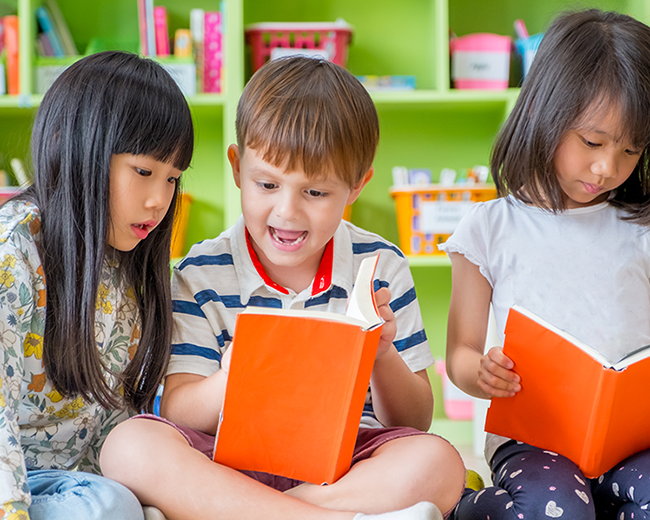
Fiction introduces students to characters whose experiences, feelings, and choices may differ from their own. As students follow a character's journey, they have opportunities to consider motivations, examine decisions, and think about how different people might interpret the same situation.
Teachers can support this thinking through purposeful discussion. For example, after reading a story, ask students
- How do two characters feel differently about the same event? What details from the story help explain their reactions?
- Why might a character make this choice? What do you know about the character that helps you understand the decision?
- How might the story change if another character told it?
These questions encourage students to look closely at characters' words, actions, and experiences. Research syntheses have found small, varied associations between fiction reading and certain social-cognitive outcomes, including perspective-taking. Reading a story alone does not guarantee that students will develop empathy, but thoughtful reading and discussion can give them opportunities to consider viewpoints and reflect on experiences beyond their own.
Close Reading Helps Students Explore Meaning
Close reading is another powerful way to explore fiction. While close reading may involve rereading, it goes beyond simply reading a text multiple times. Students closely examine a text or passage, paying attention to sentence structure, word choice, and language features to develop a deeper understanding of the author's meaning. Close reading allowed my students to read for a purpose and examine how an author's choices contribute to meaning. These practices can support students' understanding of both fiction and informational text.
By returning to a short text or a small excerpt from a longer text, my students were able to dig deep to reveal layers of meaning created by the author.
A few of the most common text-dependent questions I asked my students included
- What is the author telling me?
- Are there any hard or important words?
- What does the author want me to understand?
- How does the author play with language to add to meaning?
This instructional time also allowed me to teach an important skill that students could apply across different types of texts: annotating. When students learn how to annotate text, they have a way to record observations, mark important details, and return to evidence that supports their thinking. I always found that the most difficult part of my literacy block was getting my students to go back into the story or text to find an answer to a question. While I still don't have a magic answer for how to get all students to complete this task that seems easy to us educators, I can say that requiring my students to annotate the text with close reading strategies helped.
Extend Fiction Reading Beyond the Classroom
Families and caregivers can help students build positive reading experiences at home by making time for stories, talking about books, and allowing children to explore reading materials that interest them. Reading together, listening to a child read, or asking about a favorite character can turn everyday moments into opportunities to connect over stories.
Involving families can also help reinforce the value of reading as an enjoyable, ongoing activity. Teachers can share simple conversation prompts or suggest books that students may want to explore with family members.
I found limited success with assigning students a nightly reading log, an assignment that asked them to read for 20–30 minutes, compose a few sentences about what they read, and have a parent or caregiver sign. I found that some students completed their reading logs on the bus ride to school rather than engaging with the assignment at home. Instead, to encourage students to engage with their reading at home, I assigned them a graphic organizer to complete. During parent conferences, I found that graphic organizers, like the example shown, supported discussion at home and made the work purposeful.
A graphic organizer can be one option for helping students record characters, important events, questions, or favorite parts of a story. Other families may prefer to talk about a book, draw a scene, or share a favorite passage. The goal is to create opportunities for students to revisit stories and share their thinking in ways that work for them.
Help Students Discover the Benefits of Reading Fiction
The benefits of reading fiction include opportunities to strengthen comprehension, recognize story structure, examine different perspectives, and develop reading motivation. Engaging stories can also give students a reason to keep reading, explore unfamiliar experiences, and share ideas with others.
Teachers can support these benefits by making a variety of appealing fiction available, allowing students to make reading choices, and providing regular opportunities to read, reflect, and discuss stories. With time and access to books that capture their interests, students can build meaningful connections with fiction while developing skills that support their growth as readers.
Looking for engaging fiction for your classroom? Explore Fiction Readers from Teacher Created Materials to discover stories that help students build comprehension skills and develop a love of reading.
Bus, A. G., Shang, Y., & Roskos, K. (2024). Building a stronger case for independent reading at school. AERA Open. https://doi.org/10.1177/23328584241267843
Toste, J. R., Didion, L., Peng, P., Filderman, M. J., & McClelland, A. M. (2020). A meta-analytic review of the relations between motivation and reading achievement for K–12 students. Review of Educational Research, 90(3), 420–456 https://doi.org/10.3102/0034654320919352
Wimmer, L., Currie, G., Friend, S., & Ferguson, H. J. (2024). Cognitive effects and correlates of reading fiction: Two preregistered multilevel meta-analyses. Journal of Experimental Psychology: General. https://doi.org/10.1037/xge0001583