Teaching civics helps students understand how government works, what rights and responsibilities citizens have, and how people can participate in a democracy. The most effective approaches connect civic concepts to students’ lives through reading, discussion, inquiry, real-world projects, and everyday classroom decisions.
If you’re wondering how to teach civics in ways that engage students, start with these seven practical strategies. These approaches can be adapted for elementary, middle, and high school students and incorporated into social studies, literacy, and other subject areas.
A Quick Civics Quiz
Before exploring the strategies, try these three sample civics questions. They offer a starting point for thinking about the knowledge and concepts students need to understand.
- What does the rule of law mean?
A. The law is whatever the President says it is.
B. People who enforce the laws do not have to follow them.
C. Everyone must follow the law.
D. Judges can rewrite laws they disagree with.
- Which of these powers does not belong to the federal government?
A. Ratifying amendments to the Constitution
B. Printing money
C. Declaring war
D. Making treaties with foreign powers
3. Why does the U.S. Constitution divide power between the federal government and state governments?
A. To give the President control over state laws.
B. To allow each state to make all its own laws.
C. To prevent too much power from being held by one level of government.
D. To ensure all laws are made by Congress.
Answers: 1. C. The rule of law means everyone is subject to the law. 2. A. States ratify constitutional amendments under the constitutional amendment process. 3.C. To prevent too much power from being held by one level of government.
These sample questions illustrate different types of civic knowledge. Students need factual knowledge, but they also need opportunities to explore the principles behind the facts and apply their learning to real situations.
What Does Civics Teach Students, and Why Does It Matter?

Civics education explores the concepts of governmental power, constitutional principles, individual rights, civic responsibilities, and participation in public life. It helps students understand how decisions are made, how different levels of government function, and how people can contribute to their communities.
By engaging in civics content, students develop skills they can use throughout their lives, including evaluating information, supporting claims with evidence, listening to different perspectives, and participating in informed discussions.
These skills develop through practice. Students benefit from learning civic concepts and then applying them to questions they encounter in their classrooms, schools, and communities.
How Can Civics Fit into Everyday Lessons?
Civics can be taught as a standalone subject or incorporated into history, literacy, and other areas of the curriculum. Everyday classroom routines also offer opportunities to practice cooperation, shared decision-making, and civic responsibility.
For elementary students, a discussion about why a classroom rule exists introduces fairness, rights, responsibilities, and the purpose of rules. Middle and high school students might investigate a local issue, determine which level of government has authority over it, and evaluate possible responses.
The goal is active learning. Students need opportunities to ask questions, examine evidence, discuss ideas, and participate in decisions rather than simply memorize facts about government.
How to Teach Civics: Seven Classroom Strategies
The following seven methods of teaching civics help students connect important concepts with meaningful classroom experiences.
1. Connect Civics Across Subjects
Connect Civics with History and Local Government
When students study state, U.S., or world history, include civics lessons that explore how people govern themselves, how government power is organized, and how individual rights are protected.
For example, discuss the debate over government power and individual rights during the Constitutional Convention of 1787. Explore how ancient civilizations governed themselves and draw connections to the present. Find local and state connections to wider events and developments, such as the civil rights movement.
You can also begin with a familiar community question: Who is responsible for maintaining a public park? Students can investigate whether local, state, or federal government has a role and learn how responsibilities are distributed across levels of government.
Connect Civics with Science and Mathematics
Teachers in science and math can find connections to civics, too. Exploring public decisions about community resources connects civic responsibility to relevant issues, such as pollution, use of environmental resources, zoning restrictions, and local municipality budgeting decisions..
Try it with K–5 students: Ask students to identify a shared space, such as a playground or school garden, and discuss who helps maintain it and what responsibilities people have when using it.
Try it with 6–12 students: Ask students to explore this question: What changes have taken place in our community over the last decade? Have students
- find population data for their community.
- create a graph showing changes over time.
- identify trends or patterns.
- discuss how those changes might affect local services, housing, parks, transportation, or schools.
- share your findings and recommend one action the community could take based on the data.
This civics activity reinforces mathematical skills including graphing, data interpretation, and mathematical discourse.
2. Teach Civics Through Reading and Writing
Connect civics with literacy lessons, and literacy with civics lessons. Students can develop reading, writing, speaking, listening, and research skills while exploring civic concepts and questions.
English language arts standards emphasize skills such as citing textual evidence, conducting research, participating effectively in conversations, and presenting information. Civics topics provide meaningful opportunities to practice these skills.
Students can read books and informational texts about civics and history. Primary source documents, such as the Declaration of Independence, can provide opportunities to build close reading skills and examine how ideas about rights and government are expressed.
Students can then write a short response using evidence from the text, compare different perspectives, or explain how a civic concept applies to their classroom or community.
Try it with K–5 students: Read aloud a book about community responsibilities or working together. Ask students to identify the responsibilities described in the text and explain how those responsibilities help a community.
Try it with 6–12 students: Have students choose a news article about a local issue. Ask them to identify the civic responsibility or issue discussed in the article and cite evidence that explains why it matters. Then, have students communicate their ideas by writing a brief recommendation that encourages their classmates to take informed action on the issue.
3. Build Civic Understanding Through Inquiry
Factual knowledge provides a foundation for civics, but students also need opportunities to ask questions, evaluate information, examine evidence, and explain their reasoning.
Students can investigate a civic question by comparing sources, identifying who published each claim, and determining whether the evidence supports it. This inquiry process helps them move beyond recalling facts to developing informed conclusions about how civic principles work in practice.
Try it in class: Instead of asking students only to define the rule of law, ask, Why should the same laws apply to everyone? Have students examine a familiar scenario, explain their reasoning, and consider how consistent rules affect a community.
Try it with K–5 students: Use simple questions about fairness, shared rules, and responsibilities.
Try with 6–12 students: Examine constitutional principles, consider competing interpretations, and support their conclusions with evidence.
4. Use Projects to Practice Civic Participation
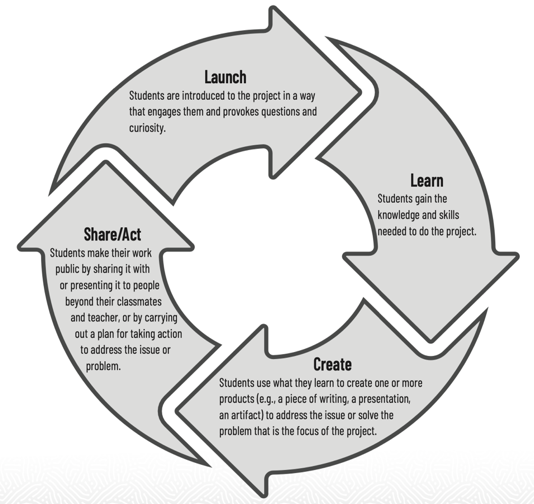
Project-based learning (PBL) is a natural fit for civics because it gives students opportunities to investigate meaningful questions and take informed action. Effective PBL involves a process of inquiry, research, decision-making, and reflection, rather than simply creating a poster or presentation. As described in Teaching Civics Today, project-based learning connects civic concepts with student engagement and classroom practice.
Here are three examples of project-based learning in civics.
Investigate a government responsibility.
Students determine which level of government (local, state, or federal) has the power to address an issue they care about. They then write persuasive letters to the appropriate people or agency.
Create a public awareness campaign.
Students develop a campaign about an issue or problem in their community or the wider world. They might use videos, art, speeches, or social media to share information and encourage informed action.
Produce a podcast.
Students explore concepts such as freedom, rights, or democracy by researching the topic and interviewing community members or experts.
A useful project sequence is to investigate a question, gather evidence, develop a response, share the response with an audience, and reflect on what students learned.
Try it with K–5 students: Invite students to investigate how to improve a shared school space. Students could identify a problem, gather classmates' ideas, develop a proposal, present it to the appropriate school staff, and reflect on the outcome.
Try with 6–12 students: Students create a podcast episode about an issue that affects their daily lives, such as school lunches, cell phone policies, teen spaces, public transportation, or community safety. They gather evidence through research and interviews with classmates, teachers, or family members, then share their findings and recommendations for informed civic action.
For additional guidance, explore Teaching Civics Today: The iCivics Approach to Classroom Innovation and Student Engagement.
5. Make Respectful Discussion Part of Civics Lessons
Civics teachers can help students develop the habits and skills needed for reasoned, evidence-based, respectful discussions about civic issues. Students benefit from learning how to explain their thinking, listen carefully, ask questions, and consider perspectives that differ from their own.
Consider having discussions rather than debates in which the goal is to win. The purpose is to understand an issue, examine evidence, and learn from other perspectives.
Two useful resources for teaching civil discourse are Facing History and Ourselves and Learning for Justice.
Sentence starters can help students participate constructively.
- “My evidence is…”
- “I think this because…”
- “Can you explain your reasoning?”
- “I see your point. Another perspective is…”
- “What information could help us answer this question?”
Try it in class: Present a question connected to a shared school or community concern. Ask students to explain their views and respond to their classmates' ideas.
For K–5 students: Use familiar questions about classroom rules, fairness, and sharing responsibilities.
For 6–12 students: Older students can practice discussing more complex civic issues while distinguishing evidence from opinion.
These activities help students develop the information literacy and critical-thinking skills they need to make informed civic decisions.
6. Practice Civic Responsibility in the Classroom
Civics can be taught through formal lessons and through the classroom culture teachers create. Everyday interactions give students opportunities to practice listening, cooperation, compromise, shared decision-making, and respect for others.
Start by co-creating classroom norms or agreements with students. Discuss why each agreement matters, how it supports the classroom community, and what students can do when a disagreement arises.
These practices can begin in the earliest grades, including during circle time and other routines that help children learn to work together.
Try it in class: Invite students to discuss a classroom decision, such as how to organize a shared space or establish routines for using classroom materials. Ask them to explain their reasons, listen to classmates, and consider how the decision will affect others.
After the decision, have students reflect on the process. Did everyone have an opportunity to contribute? How did the class consider different ideas? What could students do differently next time?
These experiences help students understand that civic responsibility involves more than knowing about government. It also involves contributing thoughtfully to a community and recognizing how individual actions affect others.
Frequently Asked Questions About Teaching Civics
How can you teach civics to elementary students?
Start with familiar experiences, such as classroom agreements, shared responsibilities, community helpers, read-alouds, and simple group decisions. These activities help students explore fairness, rules, cooperation, and civic responsibility. As students progress, introduce local government, rights, and other civic concepts through age-appropriate texts and projects.
What do you do in civics class?
Students learn about government, rights, responsibilities, democratic principles, and participation in civic life. Activities may include reading informational texts, examining primary sources, discussing civic questions, evaluating information, conducting research, and developing projects related to school or community issues.
What are some effective methods of teaching civics?
Effective methods include connecting civics with history and literacy, using inquiry-based questions, engaging students in project-based learning, facilitating respectful discussions, teaching information literacy, and building classroom routines that encourage shared decision-making. Teachers can select and adapt these approaches to match learning goals and students' ages.
How can teachers encourage students to participate in civic activities?
Give students structured opportunities to investigate a school or community issue, gather evidence, identify who can address it, and develop an informed response. Depending on their ages, students might propose an improvement to a shared school space, write a letter to a local official, or create a public awareness campaign.
Put Civics into Practice
Civics education helps students connect what they learn about government and democratic principles with the choices and responsibilities they encounter in everyday life. By incorporating civics into history, literacy, classroom discussions, projects, and shared decision-making, teachers can make civic concepts more meaningful and engaging.
Start with one of the seven strategies, adapt it to your students' needs, and give students opportunities to ask questions, evaluate evidence, listen to different perspectives, and participate thoughtfully. These experiences help students build the knowledge and skills needed to become informed and engaged members of their communities.