<img height="1" width="1" style="display:none;" alt="" src="https://ct.pinterest.com/v3/?event=init&amp;tid=2613027410734&amp;pd[em]=<hashed_email_address>&amp;noscript=1">
Skip to content
true
Tough Topics | February 24, 2026

Body Safety for Kids: How to Talk to Your Child About Their Body

Body Safety for Kids: How to Talk to Your Child About Their Body
4:18

Every parent wants their child to be safe and confident, but talking about sensitive topics like body safety can feel daunting. Learning how to protect children from abuse starts with open, age-appropriate conversations about their bodies. Teaching kids about boundaries, personal space, and trusted adults equips them with the tools to recognize unsafe situations and to speak up. By starting early and keeping the dialogue ongoing, parents can foster both safety and trust. This article offers tools and resources to do that.

Why Body Safety for Kids Matters

As a parent, the thought of my child being touched inappropriately is terrifying. But what’s even worse is discovering that a child has suffered abuse because they didn’t know how to speak up. That’s why child body safety education is so important.

Teaching kids about body safety isn’t easy—it can feel uncomfortable—but it’s one of the most important steps parents can take to protect their children.

Why Does Teaching Body Safety for Kids Matter?

Teaching body safety for kids is essential to help them recognize inappropriate behavior and feel confident speaking up. Start early by using proper names for private body parts, explaining the difference between secrets and surprises, and modeling open communication. Incorporate age-appropriate body safety books for kids to guide discussions. Regular, casual conversations about body safety empower children, strengthen trust, and ensure they know how to tell a trusted adult if something feels wrong.

Start Early: Proper Language and Boundaries

body safety for kids

I began teaching kids about body safety when my daughter was two or three. That included using the correct names for private body parts instead of euphemisms. Children who know the proper names for their bodies are more likely to report unsafe touches clearly and confidently.

I also teach her that no one is allowed to touch her private body parts except to keep her safe and healthy. Even a long hug or touch that feels wrong should be reported to a trusted adult.

Secrets vs. Surprises

A key part of how to talk to kids about body safety is helping them understand the difference between secrets and surprises.

  • Surprises are temporary and meant to be shared soon, like a hidden birthday gift.
  • Secrets that make a child uncomfortable or unsafe are never okay.

In our family, we make it clear that unsafe secrets aren’t allowed, and we repeat that message often.

Always Believe and Act

Children need to know that when they speak up, adults will listen. I teach my daughter that if she tells me something important, I will always believe her, never get angry, and act to protect her.

If she tells another adult who doesn’t respond, she should keep speaking up until someone helps. This is a core principle in child body safety education.

Make Body Safety Conversations Ongoing

Body safety for kids isn’t a one-time talk. Just like learning math or reading, children benefit from repeated, casual conversations. The more these discussions happen, the less awkward they feel.

Open communication about everyday topics—like favorite books or playground mishaps—helps children feel comfortable talking about serious issues too.

Use Books to Teach Kids About Body Safety

Body safety books for kids can make these conversations easier. Look for books with simple text, engaging illustrations, and adult guides.

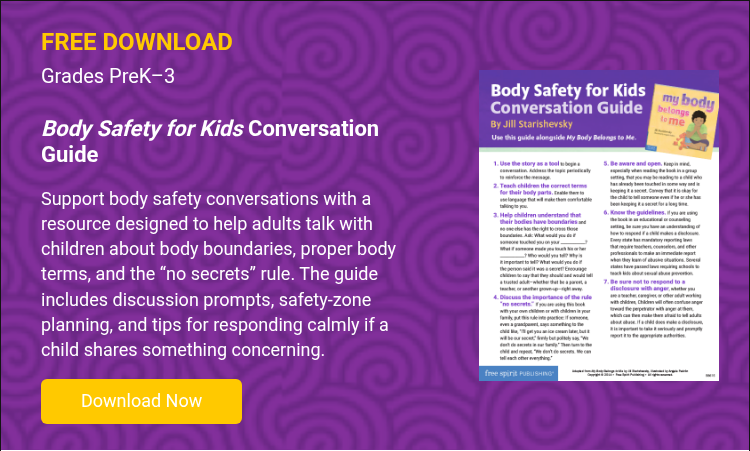
For example, My Body Belongs to Me by Jill Starishevsky is a wonderful resource for early elementary children. It provides a gentle introduction to teaching kids about body safety. My daughter called it “a good and important book,” which says it all.

Body Safety Takeaways

We can’t shield children from every danger, but we can empower them with knowledge, boundaries, and confidence. Teaching body safety for kids through early, consistent conversations helps children recognize unsafe situations, understand their right to speak up, and know which adults to trust. By making these discussions a regular part of everyday life and using resources like body safety books for kids, parents can equip their children to stay safe while fostering trust and open communication.


Categories:

Tough Topics

Author Bio:

View All Authors

Allison Wedell Schumacher

Allison Wedell Schumacher is a freelance writer, editor, and mom whose diverse work focuses on child abuse prevention, bullying prevention, social-emotional learning, fitness, and theater/acting. She is the author of Shaking Hands with Shakespeare: A Teenager’s Guide to Reading and Performing the Bard (Simon and Schuster, 2004), and her work has been featured here and at babycenter.com, MomsRising.org, and Committee for Children.

You May Also Be Interested In:

View All Posts