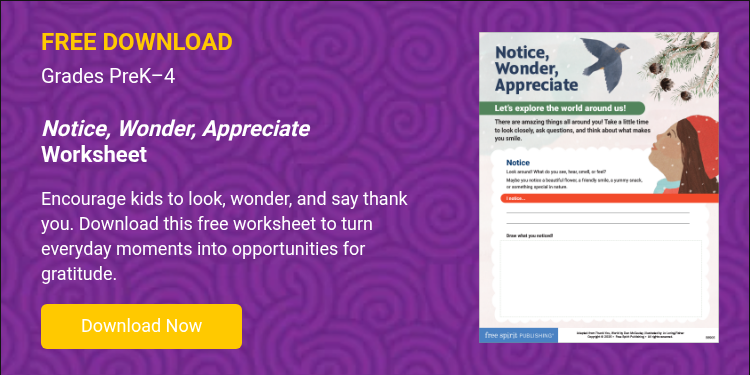
Discover how two simple questions can help children slow down, become more mindful, and develop a deeper sense of gratitude for the world around them. This article offers easy ways to encourage kids to notice everyday moments, wonder about the people and experiences behind them, and build appreciation through simple conversations at home and in the classroom.
Dear Reader,
When the holiday season approaches, gratitude is on a lot of our minds. Finding ways to be present and mindful with our loved ones, and spending time in gratitude, is important. And a lot of us find it important to help the kids in our lives be mindful and spend time in gratitude, too.
The thing is, if mindfulness and gratitude are about being aware of and appreciating the goodness in front of us, I'd argue that mindfulness and gratitude can also include thinking about what made the goodness in front of us possible. It brings these questions to mind.
- How do we encourage this kind of mindfulness and gratitude for kids and ourselves?
- How do we truly appreciate the moment and those we spend it with?
I'm a fan of easy. The easier and more accessible something is to do, for kids and ourselves, the more likely we all are to do it.
My proposition today is, when it comes to gratitude and mindfulness for ourselves and kids, we can start with two seemingly small questions. Here are questions we can use in the smallest pockets of time, on walks or sitting down with food at our lunch table.
- What do you notice?
- What do you wonder?
How Can Noticing Help Kids Practice Gratitude?
The question "What do you notice?" is a question that can bring us back to the present. It takes us away from our busy brains, our inner monologue, and reminds us: We are here.
When it comes to mindfulness for kids, noticing may require some adult modeling.
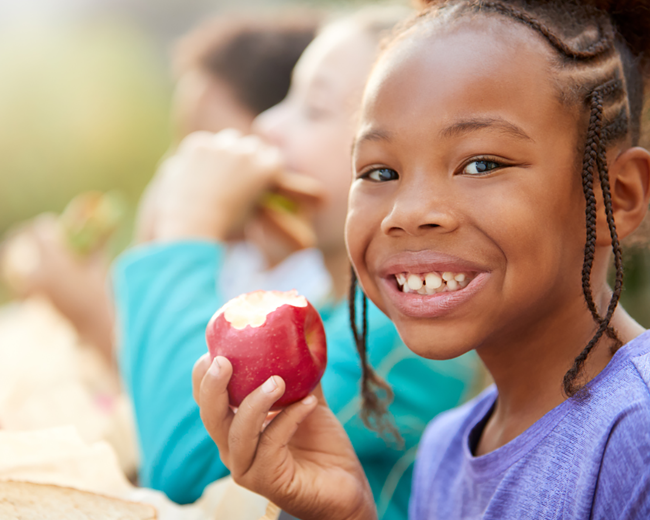
- I notice the sweetness of this apple I'm biting into.
- I notice the smell of rain as I step outside and the coolness of the droplets on my skin.
- I notice how my friend comes to greet me every morning with a huge smile.
- I notice the gift my Grandma made me is carefully wrapped, decorated with handmade drawings.
- Challenge the kids you're with—and yourself—to get specific!
When it comes to mindfulness for kids, getting specific may involve gentle follow-up questions. For example, if a kid says, "I notice the sky," you might ask, "What about the sky?" If a child says, "I notice my friend is nice to me," you may ask, "In what ways are they nice to you?" Or if you have a feeling the kid is capable of getting to that specific place without too much extra prompting, one of my favorites is simply "Tell me more."
Our gratitude, kids' gratitude, starts with taking a breath and taking time to notice.
How Can Wondering Deepen Appreciation?
"What do you wonder?" can lead us to more deeply understand the architecture of a moment and also appreciate the people in front of us more deeply. It can help kids better understand and build awe for what's in front of them.
Take the apple from earlier, for example. Noticing its texture and sweet taste is a good, grounding start. It brings us back to the moment. We might even be grateful for its sweet taste. If we add on wondering, we can deepen our gratitude, too.
I wonder how this apple got here.
Wondering Helps Us Appreciate the People Behind Everyday Moments
With this question, I may model and think about the culinary staff who put the apple on the school lunch order. I may think about the driver who delivered the food to the school and where she drove from. I may go further back and imagine the apple resting on a tree, about to be picked. If I'm really wondering how the apple got here, I may think about how it started as a winter bud, blossomed in the spring, and ripened in the fall. I may think about the sunlight, the rain, the tree that all helped this apple grow.
When I eat this apple now, I am not only connected with its texture and the sweet taste right in front of me. I am connected to the sunlight, rain, the tree, and the people who brought it here. I am more aware of what really brought me to this moment.
Wondering in this way can deepen our appreciation with other people, too. When I work with students, I wonder about the factors that brought them to my classroom: their interests, their families, their communities, their rituals, and their previous experiences of learning. And that understanding makes me appreciate our work together.
While the act of wondering is written out in an entire paragraph, wondering may happen in the span of a minute or less. It's a subtle choice to come back to the moment in a small pocket of time, with a little more appreciation.
What Are Some Gratitude Questions for Kids?
So it helps to wonder together!
Asking thoughtful gratitude questions for kids can help them look beyond what's immediately in front of them and think about the people, experiences, and little details that make everyday moments special.
Try a few of these questions and prompts.
- I wonder what steps Grandma had to take to put together this gift for me.
- I wonder how our favorite sports team got their name.
- I wonder about all the plants that need this rain to grow.
- I wonder what inspired our uncle to run the marathon and the training he's had to go through to run it.
- What is something you noticed today that made you smile?
- Who did something kind for you today?
- What is something in nature you appreciate?
- What is one small thing you might have overlooked today?
When it comes to gratitude activities for kids and ourselves, wondering can help deepen our appreciation for what's really in front of us.
How Can You Make Gratitude and Mindfulness Part of Everyday Life?
The good news is, we can use noticing and wondering all the time. There are opportunities all around us to encourage mindfulness and gratitude in ourselves and kids.
Noticing and wondering can be taken into small windows of life.
- On walks: Notice the sights, sounds, and smells around you. Wonder about the plants, animals, and people you encounter.
- During meals: Notice the flavors and textures of your food. Wonder about the people and processes that brought it to your table.
- In conversations: Notice something kind or thoughtful someone has done. Wonder about the experiences and interests that make that person unique.
- At the end of the school day: Invite students to share something they noticed and something they wondered about.
- During the holidays: Take time together to notice the traditions, people, and small moments that make the season meaningful.
These simple gratitude activities for kids can fit into everyday routines at home and in the classroom. They give children opportunities to practice appreciation in ways that feel natural and meaningful.
How Can the Thank You, World Series Encourage Gratitude at Home and in the Classroom?
Here's the thing: noticing and wondering during small moments is how my Thank You, World series started.
During the pandemic, my wife and I would take walks outdoors, talk through our days, and then notice and wonder about the world around us. We started saying, "Thank you," to all the things on our walks that made us feel better, and we continue to notice, wonder, and say "thank you" to the people and places in our lives that matter to us, too.
With this in mind, consider the stories from the Thank You, World series to be an anchor of gratitude and mindfulness for the kids in your lives: a way to spend time together noticing and wondering. These stories and activities offer an easy way to teach gratitude through conversation, curiosity, and appreciation of the world around us.
The Power of Noticing, Wondering, and Appreciating
Gratitude, taking walks outside, really paying attention: These things matter. And kids taking time to notice and wonder, taking time to be aware of what contributes to the good in nature and other people, feels good. And it's good for us, too.
In awe, gratitude, and wonder,
Dan