When major life changes occur, such as mental health challenges, loss, or significant disruption to family life, it can be hard to know how to help your family cope. When the very stability of your day-to-day life is upended, sometimes the only thing to do is to put one foot in front of the next and focus on what’s happening right now. Prioritizing small, simple practices in the day-to-day routine, even amid uncertainty, can help foster connection and strengthen family resilience. Simple things like honest communication, small and intentional moments of connection, and consistent presence can help children and adults regulate their stress, which in turn supports the mental health for everyone in the family.
In this article, you will learn strategies and tools to support your family to stay emotionally connected and to develop family resilience during times of grief, illness, loss, or major life changes.
How can families stay emotionally connected during major life changes?
Families can stay emotionally connected during times of grief, illness, or major life changes by prioritizing small, consistent moments of presence and communication. Naming what is happening, maintaining simple routines, and spending intentional time together helps children and adults feel supported and safe. During stressful seasons, connection doesn’t require solving every problem—it often means adjusting expectations, being present with one another, and creating space for honest emotions. These simple practices can play an important role in strengthening family resilience during difficult seasons.
What Does “Staying Connected” Mean in Times of Stress?
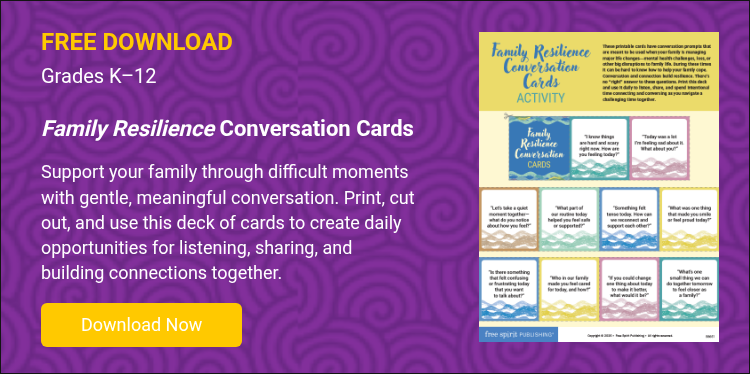
Staying connected means creating and maintaining emotional closeness and communication within the family, even when things feel overwhelming or when the family routine has been upended. It doesn’t mean knowing exactly what to say or even trying to solve a problem. It means acknowledging what is happening. Say things like “I know things are really hard and scary right now.” It also means creating moments where everyone in the family is feeling supported, such as intentional family time or one-on-one time. It also means being present with one another—taking a break from screens, playing a game together, or taking a walk together.
Connection is a key part of mental health because it helps regulate emotions, reduce anxiety, and reinforce a sense of safety. These everyday moments of support are also an important part of building resilience in children, helping them feel secure even when circumstances change.
Why does connection matter for mental health during difficult times?

When stressful situations happen, we just don’t feel it emotionally, our bodies feel it too. Our nervous system helps to regulate our stress response and connection can be one of the best ways to help to regulate the stress we feel.
For children, teens, and adults connection can
- reduce feelings of isolation
- support emotional regulation
- increase a sense of safety and predictability
- strengthen coping during uncertainty.
During times of crisis, it’s normal to shift into survival mode and to focus on logistics and problem solving. Addressing emotional needs may be a challenge, but fostering connection supports family resilience and helps everyone in the family cope more effectively. Activities that allow children to express their feelings—such as drawing, storytelling, or simple grief activities for kids—can also support healing and emotional understanding.
What gets in the way of staying connected?
Even in families where connection is a part of the everyday routine, in times of stress it can be very hard to maintain. It isn’t because you don’t care or can’t make the time, rather it’s often due to overwhelm and the impact of stress built up.
Common barriers to creating connection during times of stress include
- increased stress and fatigue
- focus on medical, logistical, or practical demands
- emotional withdrawal or avoidance
- uncertainty about what to say or how to respond.
Recognizing these barriers can help family members approach one another with more understanding and less judgment. Being aware of these challenges can also help families intentionally return to the small practices that strengthen family resilience over time.
What can connection look like in everyday life?
Connection is less about grand gestures or big outings and more about the small, intentional acts infused into everyday life. These simple moments help create stability and trust, which are essential for building resilience in children and supporting the well-being of the entire family.
Connection Through Presence
Sometimes connection simply means being physically and emotionally present. Sitting with a child—even in silence—can communicate care and reassurance, especially when emotions feel overwhelming or difficult to express.
Connection Through Communication
Talking openly helps children and other family members feel heard and understood. Using clear, age-appropriate language and acknowledging the present moment—such as saying, “Today was a lot. I’m feeling sad about it.”—can model healthy emotional expression and create space for others to share their feelings.
Connection Through Routine
Maintaining familiar routines can provide comfort and predictability when life feels uncertain. Bedtime rituals, shared meals, or simple daily check-ins give families regular opportunities to reconnect and remind children that some parts of life remain steady.
Connection Through Repair
Moments of tension or disconnection are normal in every family, especially during stressful times. Repairing after those moments, by acknowledging what happened, apologizing when needed, and reconnecting, helps strengthen relationships and reinforces trust over time.
Connection Can Help Families Navigate Life’s Hardest Seasons
Mental health is often understood as an individual experience, but it is deeply shaped by relationships. During times when everything changes, connection becomes one of the most important things a family can offer one another to feel safe and supported.
Staying connected does not require perfect words or solutions; it often means simply being present, listening, and acknowledging difficult emotions. Small, everyday actions like shared meals, bedtime routines, or short check-ins can create stability and reassurance. Even quiet activities, like reading together or taking a walk, strengthen emotional bonds. There will be days when stress or fatigue makes connection feel hard, and that is normal. What matters most is returning to one another, repairing tense moments, and showing up with care. Over time, these consistent acts help families build resilience and feel supported as they face life’s challenges together.