Inclusive early learning environments do not happen by accident. They are intentionally designed to ensure that every child and family, regardless of ability, language, culture, or background, can meaningfully participate in high-quality early childhood programs. In this article, you will learn what inclusive early childhood education is, why it matters, the benefits and challenges programs face, and practical ways educators and administrators can build inclusive systems that truly support all learners.
What Is Inclusive Early Childhood Education?
Inclusive early childhood education refers to values, policies, and practices that ensure all young children, both with and without disabilities, learn and participate together in natural, high-quality early learning environments.
At its core, inclusion means children are not separated based on ability. Instead, programs intentionally design environments, curriculum, and instruction so every child experiences a sense of belonging, active participation, and meaningful learning.
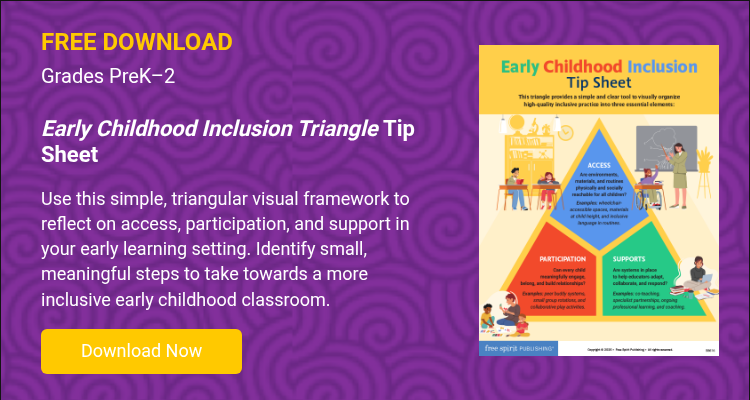
According to a joint position statement from the National Association for the Education of Young Children (NAEYC) and the Division for Early Childhood (DEC), high-quality inclusion is defined by three essential features: access, participation, and supports. These features help educators evaluate whether programs are truly meeting the needs of all children and families.
Why Does Inclusion Matter in Early Childhood Settings?
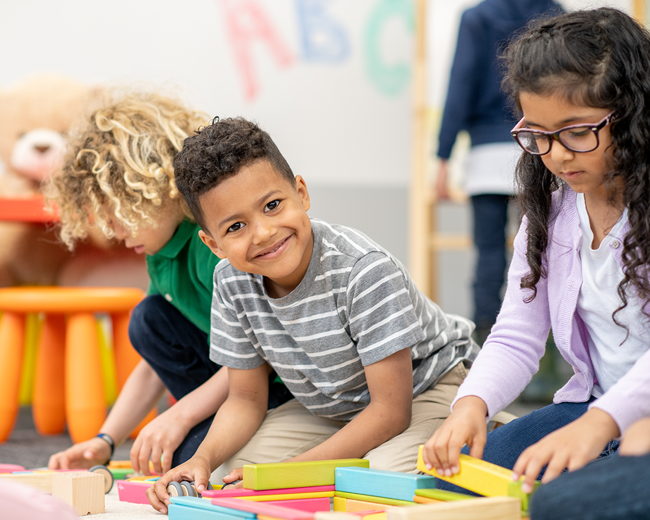
Inclusion in early childhood education matters because there is no such thing as a “typical” child. Each learner’s development, temperament, strengths, and needs are unique.
Historically, many preschool programs were designed around a narrow view of development. Today, research and practice show that learning environments must be flexible, responsive, and designed for variability from the start. Inclusive practice expands developmentally appropriate practice (DAP) to ensure children with disabilities are not excluded, isolated, or underserved.
When programs commit to inclusion, they protect children’s rights, strengthen family partnerships, and create learning communities that reflect real-world diversity.
What Are the Benefits of Inclusion in Early Childhood Education?
The benefits of inclusion in early childhood education extend to children, families, and educators alike.
For children with disabilities, inclusive environments support stronger language development, social relationships, and access to rich learning experiences. Children without disabilities also benefit by developing empathy, collaboration skills, and positive attitudes toward diversity from an early age.
Families often report a greater sense of belonging and trust when programs embrace inclusive values. Educators, in turn, gain stronger instructional practices as they learn to differentiate, observe intentionally, and design flexible learning experiences grounded in the learning sciences.
What Challenges Do Programs Face with Inclusion?
Despite its benefits, programs often encounter challenges of inclusion in early childhood education, particularly when systems and supports are not yet in place.
Educators may worry about meeting a wide range of needs, adapting curriculum, or managing time and staffing constraints. Administrators may struggle with limited resources, training gaps, or unclear expectations among families and staff.
These challenges are common and solvable. Inclusion is not about doing more alone; it is about building shared responsibility, professional learning, and partnerships that make inclusive practice sustainable.
What Supports Are Needed for Successful Inclusion?
For inclusive early childhood education to succeed, programs must intentionally build supports at multiple levels.
First, programs should establish shared expectations among educators, families, and community partners. A clear philosophy or mission statement that affirms inclusion sets the foundation for decision-making and practice.
Next, educators need access to ongoing professional learning. Research-based frameworks such as Universal Design for Learning (UDL) help teachers proactively plan flexible lessons that support learner variability. Tiered systems of support, coaching partnerships, and collaboration with specialists further strengthen inclusive practice.
Environmental supports also matter. Thoughtful classroom design, accessible materials, and predictable routines reduce barriers to participation and support self-regulation.
How Can Programs Begin or Strengthen Inclusive Practice?
Programs new to inclusion can take practical, manageable steps:
-
Study research-based guidance, including the NAEYC/DEC joint position statement on inclusion
-
Visit inclusive programs to observe practices and speak with educators
-
Offer family information sessions to build understanding and shared commitment
-
Redesign professional development to deepen expertise in inclusive strategies
-
Partner with districts or community organizations for specialized support
In small settings, this may mean adding an assistant teacher or accessing external coaching. In larger programs, it may involve rethinking staffing models and professional learning systems.
Inclusion Is an Ongoing Commitment
Inclusive early childhood education is not a checklist. It is a mindset grounded in learning, reflection, and continuous improvement. With research-based supports, shared expectations, and a commitment to meeting children where they are, inclusion is possible in any setting.
By remaining responsive to children’s needs and family voices, early childhood programs can create environments where all learners belong, participate, and thrive.
Division for Early Childhood (DEC) & National Association for the Education of Young Children (NAEYC). (2009).
Early Childhood Inclusion: A Joint Position Statement. Chapel Hill, NC: FPG Child Development Institute.