Meaningful family engagement goes beyond inviting families to attend school events. Learning how to increase family engagement in schools starts with listening to families and responding to their needs. In this article, you’ll discover practical family engagement activities for schools, including family surveys, needs assessments, flexible engagement opportunities, leadership opportunities, two-way communication, and interactive events that help families become active members of the school community.
Why Family Engagement Matters for Schools
Schools can increase family engagement by asking families what they need, offering flexible ways to participate, and giving them meaningful roles in the school community. For PreK, kindergarten, and first-grade families, these opportunities can include workshops, interactive events, and shared leadership.Every year, school districts and schools set goals for increasing meaningful family engagement. Some of these goals are mandated by local, state or federal guidelines.
What does meaningful family engagement look like for schools?
It means focusing on two important areas: first, supporting families in engaging and communicating purposefully with their children at home; and second, creating opportunities for families to engage with the school, both with and without their children.
The strongest family engagement strategies create opportunities for families to provide input, communicate with educators, access resources, and participate in the school community in ways that are meaningful and accessible to them, strengthening the home-school connection for the benefit of students.
Build Family-School Collaboration
Schools that foster family engagement are those that show clear family/school collaboration, where families provide input and feedback on activities and are not just involved in a one-way setting, such as attending a school play or an awards assembly.
Schools can strengthen this collaboration by asking families what they need, inviting their feedback when planning activities, and creating opportunities for families to contribute their ideas and experiences.
Start with Family Needs and Interests
One practical way to understand how to increase family engagement in schools is to ask families which resources, activities, and types of support would be most useful to them. Provide families with choices on their engagement through surveys or communication tools that list needs that families want to see addressed. For example, at a school where I taught prekindergarten, we had adults on a waiting list for citizenship classes, child behavior management sessions, child nutrition classes and English as a Second Language classes. These parents engaged with the school as a community hub that met their needs.
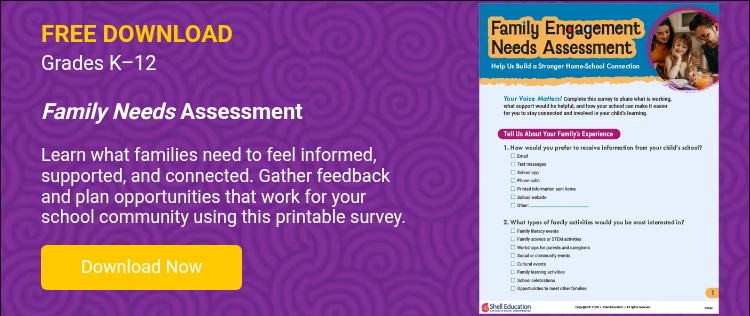
A needs assessment can help schools identify the topics, services, resources, and types of support families would find most useful. Schools can also ask about preferred meeting times, communication methods, and barriers that may make participation difficult. It is great for the teachers to be the first trusting bond between the school and the home, so an ideal time to do a short needs-assessment during the back-to-school “visit the teacher” time.
Providing needs assessments helps schools understand what families need. Sometimes families don’t understand the breadth of support schools have as they may not have been in this country and need to learn to navigate the school, most especially if they speak a language other than English.
The next step is to turn family feedback into action. For example, if survey responses show that families want more support with early literacy, a school could plan a family literacy night featuring reading demonstrations, practical ways to build early literacy skills at home, and take-home activities families can use with their children. Sharing how family input shaped the event also shows families that their voices matter and encourages continued participation.
Make Participation Easier for Busy Families
Many working families appreciate livestreamed or shared videos of evening sessions they can watch on their own time, especially if they have night shifts or work multiple jobs. Flexible options can help schools reach families who cannot attend traditional events. Follow-up sessions with teachers or family liaisons can build strong communication and trust.
Offering a combination of in-person, virtual, and recorded options, along with take-home resources, gives families more ways to participate based on their schedules, access needs, and preferences.
Give Families a Voice in School Decisions
One important class that is important in engaging families in understanding Robert’s Rules of Order. For adults that would like to take on leadership roles, this is important in giving them tools to build skill sets necessary to be successful. One such class should happen at the beginning of every school year.

Family leadership opportunities can extend beyond formal meetings. Schools can invite families to help plan events, participate on committees, share their expertise, or take on leadership roles within the school community.
Build Trust Through Two-Way Communication
Trust and two-way communication support meaningful family engagement. Teachers, family liaisons, and school leaders can strengthen relationships by listening to families, responding to their questions and concerns, and demonstrating that their perspectives are valued. Establishing two-way communication is especially important when welcoming newcomer families.
Plan Interactive Events Around Families’ Interests
An important part of how to increase family engagement in schools is planning events around families’ interests and making participation accessible. Here are some tips for school engagement:
|
Goal
|
Activity
|
| Outreach |
Provide simultaneous in-person and virtual sessions (streamed live). Provide recorded links for families to watch at their convenience. |
| Special Events |
Have a multifaceted event, such as an Author’s Tea with students reading their books to families in classrooms, or a keynote speaker in the multipurpose room followed by a snack and water and a few giveaways. Plan a family science night featuring science books and activities, or a literacy night featuring an author and a book event. |
| Interactive Family Learning |
Include activities, discussions, and demonstrations that families can try together. For example, demonstrate ways to read aloud with young children or practice simple literacy activities families can repeat at home. Invite families to share ideas and connect with teachers and other families. |
When planning events, use family feedback to select topics, formats, and activities that reflect families’ interests and priorities. Following up after an event to gather feedback can help schools improve future opportunities and continue strengthening family partnerships.
Create a Culture of Meaningful Family Engagement
Increasing meaningful family engagement is multi-faceted but extremely rewarding as families become part of the school culture.
Family engagement is most effective when it becomes part of the overall school culture instead of a collection of occasional events. Schools can build that culture by consistently listening to families, responding to their needs, communicating clearly, and providing meaningful opportunities for participation.
Use Take-Home Resources to Strengthen Engagement
Resources can be an incredible bridge for family communication and engagement sessions. The Teacher Created Materials Family Engagement Take-Home Packs for PreK–Grade 1 provide families resources that support school readiness through shared reading, conversation, and hands-on learning at home. I have written four new read-aloud books as part of these packs. Packs also include a Home Activities Guide with Read Together, Talk Together, Do Together activities, alphabet flash cards, and a copy of Being Your Child’s Most Important Teacher: A Guide for Families with Young Children. The activities help families build oral language, vocabulary, alphabet knowledge, beginning phonological awareness, comprehension, and confidence using simple routines and everyday materials. Available in English and Spanish, the packs also provide an accessible way for schools to strengthen home-school partnerships and engage multilingual families.
Building a Stronger Home-School Partnership
Meaningful family engagement is about building relationships in which families and educators listen to one another, share responsibility, and work together to support children. Schools can make family engagement more meaningful and inclusive. When families are treated as valued partners in the school community, engagement becomes an ongoing part of school culture. These strong home-school partnerships can help create a school community where families, educators, and children feel connected and supported.


