All language communities share common goals: to communicate effectively with one another to meet personal and collective purposes. Teachers can make school learning meaningful by connecting lessons to students’ experiences and providing daily opportunities to use language across subjects. In this article, you’ll explore how teachers can connect language learning to students’ experiences, build academic language through daily practice, and use simple classroom activities to encourage meaningful discussion. By making language practice relevant to students’ lives and learning goals, teachers can help English learners express their ideas and engage with academic content.
What Is English Language Learning in School?
English language learning can refer to studying English as a subject or developing the English skills students need to communicate and learn throughout the school day. English language learning involves listening, speaking, reading, and writing, with opportunities to practice these skills in meaningful contexts.
English language arts instruction often focuses on literacy, including reading literature and informational texts, developing writing skills, and understanding how language works. English language development focuses on helping students build proficiency in English so they can participate in classroom activities and communicate their ideas. The two areas overlap, and both contribute to students’ academic learning.
This article focuses on English language development across content areas. By learning about students’ interests and providing regular opportunities for meaningful discussion, teachers can help English learners use English to understand content, share ideas, and participate in classroom learning.
Language Communities: Connecting Everyday and Academic Language

We are all language learners. I am often reminded of that when I hear my own children talking and don’t understand the meaning of words I thought I was familiar with. I listen closely and try to figure out the new ways they are transforming language to create their own language communities. I am in awe at the ease with which children and adolescents move across language communities, and I often wonder what makes these social language experiences so successful.
What can we learn from these experiences to support language learning in school?
All language communities share a common purpose: communicating effectively to meet personal and collective needs. Academic language development follows a similar principle. Students encounter learning objectives across subject areas every day, each with language demands that help them access content, interpret meaning, and communicate what they have learned orally and in writing.
Academic language includes the vocabulary and ways of communicating students use to describe, compare, explain, and discuss subject content. For example, students might compare two historical events, explain how they solved a math problem, or describe an observation during a science investigation.
Students bring valuable language knowledge, experiences, and communication skills from their homes and communities. Teachers can build on these strengths by connecting familiar ways of communicating with the language students need for academic tasks.
When students understand the purpose of a learning objective and can connect it to authentic experiences, classroom communication becomes more meaningful. They have opportunities to use language to explore ideas, learn with others, and communicate beyond the classroom.
How Can Teachers Support English Language Learning?
Teachers can support English language learning by connecting lessons to students’ experiences and providing frequent opportunities to discuss, read, and write about meaningful content. Getting to know students and incorporating daily academic language practice can help make learning relevant across the curriculum.
Get to Know Students and Connect Learning to Their Experiences
Learning about students helps us make language learning in school meaningful. Some of my favorite strategies allow students to share who they are and to explore their identities. These activities also help teachers discover topics, experiences, and interests they can use to create relevant learning opportunities.
For younger students, I encourage a personal collage. Invite students to choose categories that represent their lives and interests, such as
- likes and dislikes
- favorite colors, foods, games, music, or sports
- family pets or important people in their lives
- hobbies and special interests
Explore possible categories with the class and allow students to choose how they organize their collages. The goal is to give children the freedom to express themselves rather than to follow a standard template.
Older students may want to think more deeply about their identities and choose how to share them. Possible options include
- a song or lyrics that express something about who they are or what they value
- a cultural artifact or meaningful object connected to their family or community
- a piece of artwork that represents their personal or social identity
- a drawing, written reflection, or video montage using images they choose
- a collection of words, symbols, or images that represents their interests
Offer alternatives to sharing personal photographs or social media content so every student can choose a comfortable way to participate.
The goal is to give students flexibility in how they share their identities. Learning about students helps us build bridges between the world they know and the academic experiences they are navigating at school.
Teachers can use what students share to select familiar images, develop relevant discussion prompts, and connect new concepts to students’ interests. These connections create meaningful opportunities for students to listen, speak, read, and write as they learn.
Build Academic Language Through Daily Practice
Developing language across disciplines requires opportunities to use language in all content areas. Whether students are learning history, English language arts, science, math, the arts, or physical education, they should have regular opportunities to talk about what they are learning and to use academic vocabulary in classroom discussions and writing.
To build fluency in any language, we need to use the language. Although lessons offer many opportunities for discussion, quick activities at the beginning of a lesson can establish a consistent routine for daily language practice.
Here are two activities to try.
Four-Image Connections
Select four images related to content students have previously studied or experiences they recognize. Display the images and invite students to talk with a partner or table group about how they might be connected.
Keep the activity open-ended. Students can suggest different connections and explain their reasoning using familiar content vocabulary.
For example, four images of a seed, a plant, sunlight, and water could prompt students to discuss what plants need to grow.
Use an optional sentence starter, such as These images are connected because…
What Happened?
Choose an image that connects to familiar experiences or previously learned content. Display it and invite students to discuss what might have happened before the moment shown.
Students can suggest possible causes, explain their thinking, and compare their ideas with a partner. Keep responses open-ended so students can explore different possibilities while practicing cause-and-effect language.
For example, an image of a puddle beneath a sunny sky could prompt students to discuss why the puddle formed and what might happen to it next.
These activities are sometimes called language bell ringers or quick activities for language development. They offer an accessible way to begin a lesson while giving students regular opportunities to practice academic vocabulary, sentence structures, and thinking skills.
How Can Teachers Create a Quick Language Practice Activity?
Teachers can create a quick language practice activity by choosing a thinking skill, selecting a relevant image, inviting students to apply the skill, and encouraging discussion with partners or small groups. These four steps help students practice the language they need to express their thinking.
Step 1: Select a Thinking Skill
Choose a skill such as describing, identifying, comparing, contrasting, explaining, expressing an opinion, or identifying cause and effect.
Step 2: Select an Image
Choose an image that represents previously learned content or a familiar experience.
Step 3: Apply the Thinking Skill
Ask students to apply the thinking skill. Invite students to share their ideas about the image orally or in writing, using the selected skill.
Step 4: Encourage Discussion
Have students exchange ideas with a partner or small group so they can practice communicating their thinking and learn from one another.
Let’s see how this process works with an example activity in which students are asked to compare and discuss.
Display two images of different animal habitats. Ask students to compare the environments and identify similarities and differences. Students can first record an observation, then discuss their ideas with a partner using a sentence starter such as Both habitats have…, but…
This simple routine connects a thinking skill, visual information, and partner discussion. Teachers can adapt the images, vocabulary, and sentence starters to fit different grade levels and subject areas.
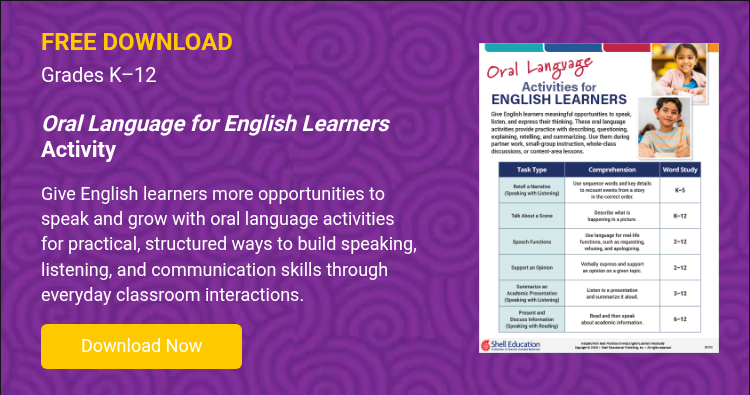
English learners are developing language proficiency while engaging with grade-level content, which can involve managing multiple learning demands at once. Teachers can support this process by making content accessible, modeling useful language, and providing frequent opportunities to interpret information and communicate ideas in English. Consistent opportunities for structured dialogue, discussion prompts, and partner activities strengthen oral language skills for English learners.
Frequently Asked Questions About English Language Learning
What is English language learning?
English language learning is the process of developing the ability to understand and communicate in English through listening, speaking, reading, and writing. In school, students practice these skills to participate in classroom activities, understand academic content, and express their learning.
What is the difference between English language arts and English language development?
English language arts generally emphasizes literacy skills, including reading, writing, literature, and how language works. English language development focuses on building English proficiency for communication and academic participation. The two areas overlap, and the way schools organize instruction varies by program and grade level.
How do students use English across school subjects?
Students use English to communicate their understanding in every content area. They might explain a math solution, compare historical events, describe a science observation, discuss a character’s motivation, or write about an artistic choice. These tasks give students opportunities to practice academic vocabulary and to communicate subject-specific ideas.
How can teachers support learning English in school?
Teachers can connect lessons to students’ experiences, use familiar images to introduce discussion, and provide regular opportunities for partner conversations and writing. Short, structured activities help students practice academic language while engaging with meaningful content across subjects. Using English language development resources ensures that English learners build proficiency in listening, speaking, reading, and writing.
Make Daily Language Practice Meaningful
English language learning is part of the school day. When teachers connect learning to students’ identities and experiences, use familiar visuals, and provide consistent opportunities for discussion, students can practice communicating their thinking across content areas. Small, purposeful opportunities for language use can help make academic learning more accessible and classroom communication more meaningful.