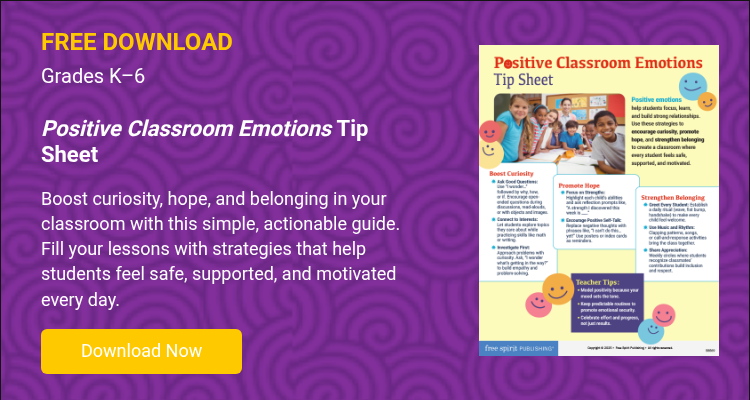
Positive emotions in the classroom are more than “feel-good” experiences. They are essential for learning, engagement, and social-emotional development. When students feel safe, supported, and curious, their brains are better able to focus, retain information, and build meaningful relationships. This article explores practical strategies teachers can use to foster student curiosity, to promote hope in students, and to strengthen classroom belonging strategies, creating a positive classroom climate where emotional safety in the classroom is a priority.
Why Are Positive Emotions Important for Learning and Classroom Success?
Have you heard that feelings are contagious? This is true in the classroom, as well as in other social contexts, because our brain chemistry and body respond physically to emotions. Positive emotions reduce stress hormones like cortisol and increase dopamine and serotonin, helping students feel physically and emotionally safe. When students feel good, positive actions follow—relationships strengthen, trust grows, and learning becomes easier.
Some might worry that focusing on positive emotions takes time away from academics, but strong negative emotions can seriously disrupt learning. Students who are anxious, frustrated, or upset cannot fully focus and may engage in conflicts or experience meltdowns, interrupting class time and causing emotional stress to classmates. Focusing on positive emotions in the classroom supports both well-being and learning. Here are strategies to boost curiosity, hope, and belonging.
How Can Teachers Foster Student Curiosity?
Curiosity, the desire to learn or know something new, is a natural driver of learning. Before language is learned, babies are driven to understand their environment by exploring their surroundings through their senses. Studies show that once children begin to speak fluently, they will typically ask somewhere between 70 and 300 questions a day!
Encouraging students to ask questions, explore interests, and investigate problems builds engagement, creativity, and critical thinking. Activities like “I wonder…” questions, inquiry projects, and student-led explorations increase intrinsic motivation and help create a positive classroom climate.
Ask good questions
What makes a question good? Good questions cannot be answered by a simple yes-or-no response. One effective strategy is to use I wonder as a sentence starter, followed by if, why, or how.
Wondering can be used in many contexts, such as during read-alouds, text exploration, and pair-shares.
Teachers can use pictures to introduce new content, prompting students to craft their own I wonder questions. These questions can guide a bulletin board inquiry or be paired with objects passed around the room for story writing. This approach develops creative and scientific thinking while keeping learning fun and engaging.
Connect to students’ interests
Providing time for students to research and plan their own passion projects allows them to focus on hobbies while applying emerging skills. For example, if students are working on percentages in math and citing sources in English, these skills can be incorporated into a project on Minecraft or another personal interest. Connecting academic tasks to students’ real-world interests increases engagement, fosters curiosity, and helps students see the relevance of their learning.
Don’t jump to conclusions
When students face challenges, avoid blame and instead get curious. Teach students to be detectives who investigate problems rather than make quick, often incorrect, assumptions. The I wonder technique works well here, too—for example, when meeting with a student about missed assignments, ask, “I wonder what’s been getting in the way of you completing the work?” Using an investigative approach promotes empathy, open-mindedness, and cooperation while modeling curiosity and critical thinking in difficult situations.
How Can Teachers Promote Hope in Students?
Hope is defined as experiencing a positive expectation or aspiration about the future. Hope gives students a positive expectation for the future and encourages perseverance. Students who feel hopeful set goals, make plans, and continue despite setbacks. Teachers can inspire hope by focusing on strengths, modeling positive self-talk, and creating opportunities for students to reflect on personal progress.
Focus on strengths
Avoid a deficit model of education that looks for what’s lacking in students. Instead, identify multiple strengths in each of our students and help them uncover and recognize their own strengths.
Expand students’ thinking about what it means to be “intelligent.” Identify multiple intelligences and provide weekly reflection prompts like, “A strength I discovered this week is _________.”
Teach positive self-talk
Negative internal scripts contribute to feelings of hopelessness that compromise children’s motivation. Help students replace negative internal scripts with phrases like “I can’t do this… yet!” and display examples in posters or collages. Fostering a growth mindset reminds students that challenges are normal and change is possible.
How Can Classroom Belonging Strategies Improve Student Outcomes?
Belonging refers to having a fond feeling toward one’s group or place and to feeling that one is accepted, respected, welcomed, and included. Belonging has been associated with better academic and health outcomes for students. A sense of social isolation or alienation, on the other hand, is a risk factor for negative behaviors, including substance abuse, self-harm, and aggression.
Due to the many social dynamics at play in society and at school, some students have a higher sense of belonging than others do. Classroom belonging strategies strengthen peer relationships and foster emotional safety in the classroom.
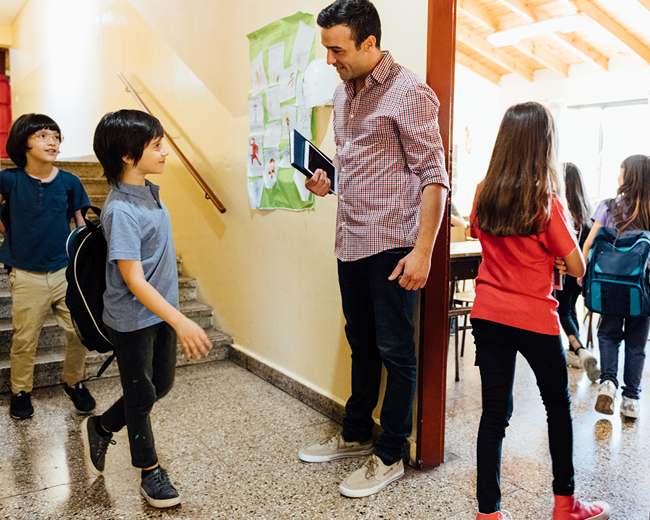
Greet every student
Establish a daily greeting ritual that ensures every child is welcomed into the classroom. A 2018 study found that implementing a greeting ritual increased student engagement and decreased disruptions. I’m a fan of the “choose your greeting” posters that contain images of the options: fist bump, wave, high five, smile, dance, or hug. Have students greet one another as well in order to practice social skills.
How Do Positive Emotions Influence Learning and Relationships?
Positive emotions in the classroom increase focus, cooperation, and social bonds. Students are more likely to engage with content, participate in class, and build stronger relationships with peers and teachers. Prioritizing curiosity, hope, and belonging creates a joyful and emotionally safe environment that supports learning for all students.
Teachers' moods are powerful. Your mood might be the number one influence on your students’ moods in the classroom. When educators model positivity, celebrate successes, and maintain emotional safety, students mirror those behaviors. Positive emotions ripple through the classroom, improving attention, patience, and collaboration.
Conclusion: How Can Teachers Cultivate a Positive Classroom Climate?
Focusing on positive emotions in the classroom is the foundation for learning, not a distraction from it. By fostering student curiosity, promoting hope in students, and implementing classroom belonging strategies, teachers create a positive classroom climate where emotional safety thrives. A proactive focus on mood, inclusion, and engagement transforms the classroom into a space where students feel valued, relationships deepen, and learning is joyful.