Students with ADHD may need classroom supports that help them manage attention, organization, movement, impulse control, and follow-through. Modifications for students with ADHD can create a learning environment where students can better access instruction, build independence, and develop confidence.
From reducing distractions and providing clear directions to using organization tools and teaching self-monitoring skills, effective ADHD classroom interventions give teachers practical ways to support student success. In this article, you’ll learn classroom modifications and interventions that can help students with ADHD stay engaged, participate more successfully, and build skills they can use beyond the classroom.
What Are Modifications for Students with ADHD?
Modifications for students with ADHD are classroom adjustments that help students access learning and manage challenges related to attention, organization, self-regulation, and task completion. These supports change the way students engage with classroom routines or assignments so they can demonstrate what they know.
Examples of ADHD modifications in the classroom may include
- providing written and visual directions
- breaking assignments into smaller steps
- reducing unnecessary distractions
- using organization systems such as folders, checklists, or color-coding
- offering movement opportunities or flexible seating options
- teaching self-monitoring and goal-setting strategies.
These classroom supports can be used alongside other interventions for students with ADHD to help students develop skills and participate more confidently in learning.
Understanding ADHD and Common Classroom Challenges
Students with ADHD may experience challenges that affect learning, classroom routines, and relationships with peers. ADHD can influence attention, impulse control, activity levels, organization, and the ability to complete multi-step tasks.
Students who experience challenges with attention may have difficulty
- focusing on important details
- ignoring distractions
- following multi-step directions
- completing assignments
- managing materials and time.
Students who experience hyperactivity or impulsivity may have difficulty
- remaining seated for extended periods
- waiting their turn
- managing movement and energy
- avoiding interruptions
- pausing before responding.
Understanding these challenges helps teachers choose appropriate classroom modifications for students with ADHD. Supportive strategies focus on helping students develop skills and participate successfully rather than simply reducing behaviors.
What Is the Difference Between ADHD Modifications and Classroom Interventions?
ADHD modifications adjust the learning environment, materials, or routines to help students access instruction. Classroom interventions are intentional strategies used to teach skills, support behavior, and help students make progress.
For example
- a modification might include providing written directions instead of only verbal instructions.
- an intervention might include teaching a student how to use a checklist to complete assignments independently.
Both approaches can support students with ADHD. Effective classroom interventions for ADHD often combine environmental supports with strategies that help students build self-regulation, organization, and independence.
Why Classroom Interventions Are Essential for Students with ADHD
Students with ADHD often benefit from consistent classroom supports that address learning behaviors, organization, and self-management skills. Research-supported behavioral strategies can be an important part of a student’s overall support plan and can be implemented through daily classroom routines.
According to guidance from organizations such as the Centers for Disease Control and Prevention (CDC) and the American Academy of Pediatrics (AAP), behavioral classroom supports are an important component of ADHD care, particularly when combined with other recommended supports when appropriate.
Parents play an essential role in supporting children with ADHD. Teachers play an important role by creating predictable routines, teaching expectations clearly, and providing tools that help students recognize their strengths and build independence. Effective ADHD classroom interventions support both academic progress and students’ confidence in their ability to succeed.
What Classroom Modifications Help Students with ADHD Manage Distractions?
Modifications for students with ADHD can help reduce distractions by creating an environment that supports focus and attention. Small classroom adjustments can make it easier for students to engage with instruction and complete tasks.
Helpful strategies include
- seating students in areas with fewer distractions, such as away from busy hallways, windows, or high-traffic areas
- creating a quieter workspace for independent work when possible
- reducing unnecessary visual clutter around a student’s workspace
- providing predictable classroom routines and schedules
- using visual reminders for important tasks and expectations.
Thoughtful seating arrangements are one example of an ADHD modification in the classroom. The goal is not to isolate students but to create a learning space where they have the best opportunity to focus and participate.
Use Clear Directions and Assignment Supports
Students with ADHD may benefit from additional supports that make assignments easier to understand, organize, and complete. Clear instructions and structured routines are effective classroom interventions for ADHD because they reduce uncertainty and help students manage multi-step tasks.
Teachers can support students by
- providing written directions along with verbal instructions
- breaking larger assignments into smaller steps
- highlighting the most important information
- using assignment checklists
- providing visual reminders or examples of completed work
- checking for understanding before students begin independent work.
A student who understands the steps needed to complete a task is more likely to begin the assignment, stay engaged, and experience success.
Support Organization with Color-Coding and Simple Systems
Organization can be challenging for many students with ADHD, especially as classroom expectations become more complex. Simple systems can help students manage materials, assignments, and deadlines.
Organization supports may include
- color-coding folders, notebooks, and digital files by subject
- using checklists for materials and assignments
- keeping important papers in designated locations
- setting reminders for upcoming tasks
- teaching students how to organize their workspace.
Color-coding can be especially helpful for middle- and high-school students who move between classrooms and manage multiple subjects throughout the day. These ADHD modifications create routines that make organization more automatic over time.
Use Peer Support Carefully and Positively
Students with ADHD can benefit from structured opportunities to work with classmates. Positive peer support can encourage collaboration, strengthen relationships, and provide additional reminders for classroom routines.
When using peer support as a classroom intervention, teachers can
- pair students for collaborative activities and partner work
- use peer check-ins for routines such as gathering materials or reviewing assignment requirements
- encourage teamwork and shared responsibility
- provide opportunities for students to learn from one another.
Peer support should be designed to promote inclusion and connection. A classmate can be a learning partner, but students with ADHD should maintain ownership of their own work, choices, and progress.
How Can Teachers Support Students with ADHD Who Need Movement?
Students with ADHD may benefit from movement opportunities that help them regulate energy and maintain focus. ADHD classroom interventions that include appropriate movement can support attention while keeping classroom routines consistent.
Helpful movement supports include
- providing short movement breaks between tasks
- allowing flexible seating options when appropriate
- offering opportunities to stand while working
- using quiet fidgets or sensory tools when they support learning
- assigning classroom jobs that include purposeful movement
- building opportunities for active learning into lessons.
Movement is a natural part of learning for many students. When expectations are clear, movement supports can help students stay engaged without disrupting instruction.
Set Clear Expectations for Restlessness and Impulsivity
Students with ADHD may need explicit instruction and consistent routines to understand how to manage impulses and classroom expectations. Proactive behavior interventions in the classroom help students practice appropriate behaviors before challenges occur.
Teachers can support students by
- establishing clear expectations for movement, participation, and transitions
- using private signals or reminders when a student needs redirection
- offering fidgets to meet sensory needs
- teaching and practicing classroom routines
- providing specific feedback about successful behaviors
- reinforcing progress with encouragement and recognition.
Clear routines help students understand what is expected and provide a predictable structure that supports self-regulation.
How Can Behavior Modification Help Students with ADHD?
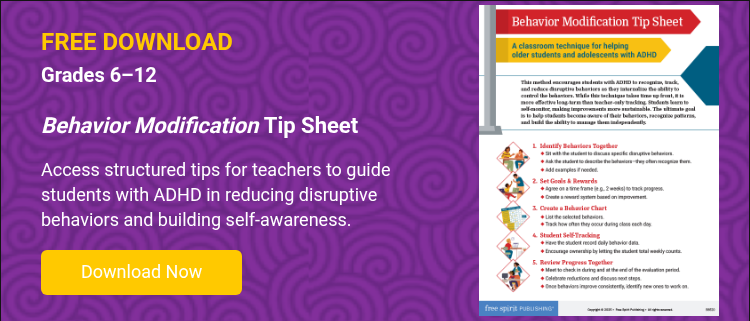
Behavior modification for ADHD can help students recognize patterns, set goals, and develop greater awareness of their choices. When used effectively, behavior supports focus on skill-building and progress rather than punishment.
Behavior modification examples for students may include
- identifying specific behaviors the student wants to improve
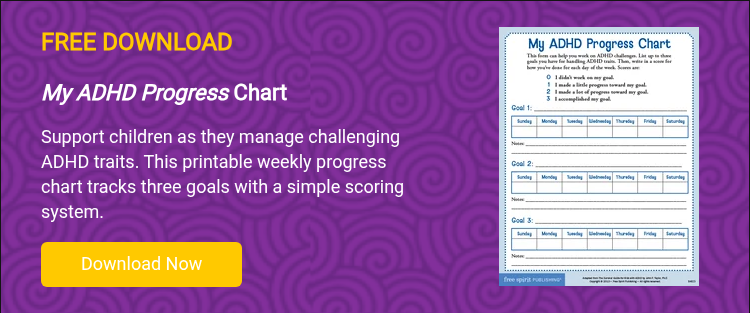
- tracking progress using a simple chart or checklist
- setting realistic goals
- reviewing progress regularly with a teacher
- celebrating growth and improvements.
This approach works best when students are active participants in the process. Self-monitoring strategies can help students understand their own behaviors and gradually build independence.
Teach Self-Monitoring with Simple Tracking Tools
Self-monitoring is an effective intervention for students with ADHD because it helps students notice their own behaviors and make intentional changes.
Teachers can introduce self-monitoring by following these steps
- Identify one or two specific behaviors the student wants to improve.
- Discuss why the behavior matters and how it affects learning.
- Create a simple tracking tool, such as a checklist or chart.
- Have the student record progress during a set period of time.
- Schedule regular check-ins to review progress and adjust goals.
- Celebrate improvement and identify next steps.
For example, a student may track goals such as
- beginning assignments on time
- raising a hand before speaking
- completing classwork steps
- staying focused during independent work.
The purpose of self-monitoring is to help students develop awareness and confidence. Over time, students can learn to recognize challenges and use strategies independently.